Threatening Your Partner With Second Marriage Is Now a Punishable Crime in Pakistan
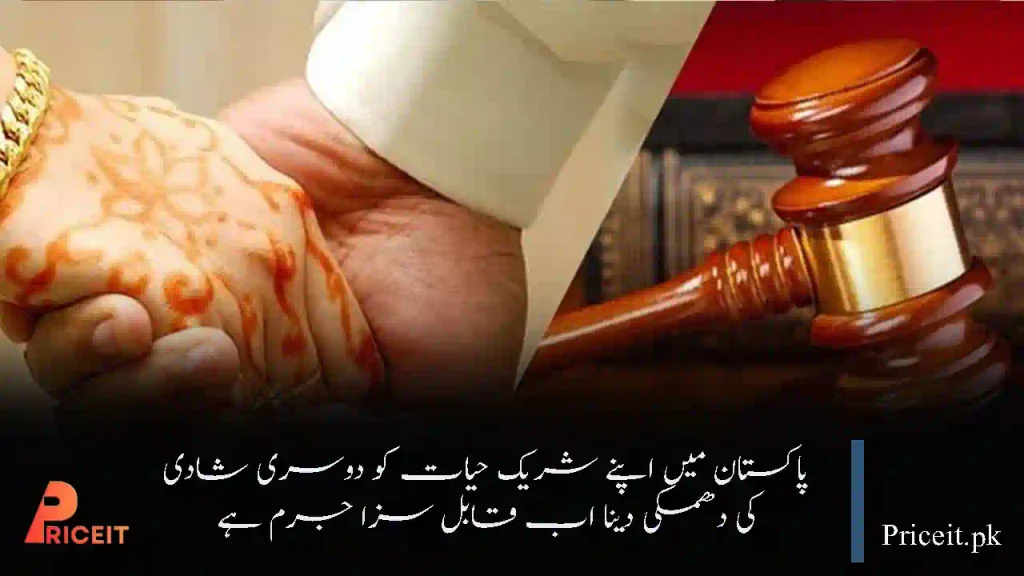
Threatening your partner withThreatening Your Partner With Second Marriage Is Now a Punishable Crime in Pakistan
Threatening your partner with second marriage is now a punishable crime in Pakistan. This legal change represents a major shift in how domestic abuse is defined and handled. For decades, emotional abuse inside marriage remained invisible, ignored, or socially justified. Many women lived under constant fear when their husbands used the threat of a second marriage as a way to control, silence, or pressure them.
The law now recognizes that emotional harm can be as destructive as physical violence. Fear, anxiety, and psychological pressure can damage mental health, family stability, and personal dignity. By criminalizing threats of second marriage, Pakistan has taken an important step toward protecting spouses from non-physical abuse.
This article explains the law in detail, using simple English. It covers the legal background, reasons behind the law, punishments, rights of women and men, common misunderstandings, and practical guidance. The content is written to match exactly what readers search for and expect when they want clear legal answers.
Understanding the Legal Meaning of Threatening With Second Marriage
Threatening your partner with second marriage means using the idea of marrying another woman as a tool to create fear or pressure. This threat may be spoken directly or hinted indirectly. In many cases, it is used during arguments or conflicts to force the wife into silence or submission.
Under the new legal framework, it does not matter whether the husband actually plans to marry again. The law focuses on the impact of the threat, not the intention to perform the marriage. If the threat causes mental distress, emotional suffering, or fear, it is considered abuse.
The law clearly states that marriage should not be used as a weapon. Using religious or cultural concepts to harm a partner emotionally is now recognized as unlawful behavior.
Why Emotional Abuse Was Ignored for So Long
For many years, domestic violence laws in Pakistan mainly focused on physical harm. Bruises, injuries, and visible violence were easier to prove. Emotional abuse, on the other hand, happens silently. It leaves no physical marks but deeply affects mental well-being.
Threats of second marriage were often dismissed as “family matters” or “normal marital disputes.” Women were expected to tolerate such behavior for the sake of family honor or children. This social attitude allowed emotional abuse to continue without accountability.
The new law challenges this mindset. It recognizes that fear and humiliation are forms of violence. Emotional safety is now considered a basic right within marriage.
Cultural Impact of Second Marriage Threats in Pakistan
In Pakistani society, marriage carries strong emotional, social, and financial importance. A woman’s identity, security, and social status are often linked to her marriage. Because of this, the threat of a second marriage creates deep insecurity.
Such threats can lead to:
- Constant anxiety
- Fear of abandonment
- Depression and stress
- Loss of self-confidence
- Emotional isolation
Many women change their behavior just to avoid such threats. They may stop expressing opinions, tolerate injustice, or accept unfair treatment. The law now recognizes this harm and offers protection.
Legal Background Before the New Domestic Violence Law
Before this development, Pakistani family law already regulated second marriages but did not directly address threats.
Muslim Family Laws Ordinance 1961
The Muslim Family Laws Ordinance 1961 places restrictions on second marriages:
- A man must seek written consent from his first wife
- Approval from the Union Council Arbitration Committee is mandatory
- Contracting a second marriage without permission is a punishable offence
Penalties may include:
- Fine
- Imprisonment
- Immediate payment of full dower
Despite these rules, men often used the threat of second marriage without actually proceeding. Since no marriage occurred, women had no legal remedy. The new domestic violence law closes this gap.
What the Domestic Violence Law Actually Says
The Domestic Violence (Prevention and Protection) Act defines domestic violence in a broad and realistic way. It recognizes that harm can be physical, emotional, psychological, verbal, or economic.
Under this law, emotional abuse includes:
- Threats
- Intimidation
- Humiliation
- Mental pressure
- Verbal harassment
Threatening a spouse with second marriage or divorce falls clearly within this definition.
The law focuses on behavior that causes fear or distress, even if it happens inside the home and without witnesses.
Is Second Marriage Itself Illegal in Pakistan
Second marriage is not illegal in Pakistan if all legal conditions are fulfilled. The law does not ban second marriage. It regulates it.
However, threatening a partner with second marriage is illegal because it is used as a form of emotional abuse. The difference is important:
- Second marriage → regulated under family law
- Threat of second marriage → punishable under domestic violence law
This distinction protects religious rights while preventing misuse for emotional harm.
Punishment for Threatening With Second Marriage
Threatening your partner with second marriage is now a punishable crime in Pakistan, and the punishment can be serious.
Possible penalties include:
- Imprisonment up to three years
- Monetary fines
- Issuance of protection orders
- Restrictions on contact or communication
The court may also order counseling or behavioral rehabilitation if required.
The goal is not only punishment but also prevention of further abuse.
Protection Orders and Their Importance
A protection order is a legal tool designed to stop abuse immediately.
A court may issue a protection order to:
- Stop further threats
- Prevent harassment
- Restrict contact
- Ensure safety of the victim
If the accused violates a protection order, it becomes a separate criminal offence. This gives strong legal protection to victims.
How a Victim Can File a Complaint
The law allows easy access to justice.
A complaint can be filed by:
- The affected wife
- A family member
- A guardian
- A social welfare officer
Steps usually include:
- Filing a complaint with police
- Submitting an application to the Magistrate
- Requesting a protection order
Courts are instructed to handle such cases with urgency and sensitivity.
Evidence That Can Be Used in Such Cases
Emotional abuse can be proven through various forms of evidence.
Common types of evidence include:
- Voice recordings
- Text messages or WhatsApp chats
- Written threats
- Witness statements
- Psychological reports
Even circumstantial evidence can be accepted if it shows a consistent pattern of abusive behavior.
Role of Police in Domestic Violence Cases
Police officers play a critical role in enforcing the law.
They are required to:
- Record complaints seriously
- Avoid pressuring victims to compromise
- Assist in obtaining protection orders
- Ensure safety of the complainant
Training programs aim to help police recognize emotional abuse and respond appropriately.
Role of Courts and Magistrates
Courts are responsible for ensuring justice and protection.
They must:
- Act quickly
- Hear victims respectfully
- Prevent retaliation
- Issue timely orders
The law emphasizes speedy trials to reduce prolonged suffering.
Rights of the Accused Person
The law also protects against misuse.
The accused has the right to:
- A fair trial
- Legal representation
- Present evidence
- Challenge allegations
False complaints can also result in legal consequences. This balance ensures fairness.
Impact on Women’s Mental Health
This law is especially important for women’s mental health. Living under constant threat damages emotional stability and self-worth.
Legal recognition of emotional abuse:
- Validates women’s experiences
- Encourages reporting
- Reduces stigma
- Promotes emotional safety
Mental peace is now treated as a legal right, not a privilege.
Impact on Family and Society
Healthy families are built on respect, not fear.
This law promotes:
- Healthier communication
- Mutual respect
- Reduced domestic conflict
- Stronger family units
By addressing emotional abuse, the law contributes to long-term social stability.
Common Myths About This Law
“Men cannot even talk about second marriage now”
Talking is not illegal. Threatening, intimidating, or using it to control is illegal.
“Women will misuse this law”
Safeguards exist. Courts require evidence and fair trials.
“Only physical violence matters”
This belief is outdated. Emotional abuse is now legally recognized.
What Women Should Know About Their Rights
Women should understand that:
- Threats are not normal marital behavior
- The law protects emotional dignity
- Silence is not required
- Legal help is available
Awareness is the first step toward protection.
What Men Should Understand About Responsibility
Men must understand that:
- Marriage requires respect and maturity
- Emotional abuse has legal consequences
- Threats damage trust and family stability
- Healthy communication is essential
The law encourages accountability, not fear.
Frequently Asked Questions
Final Thoughts
Threatening your partner with second marriage is now a punishable crime in Pakistan. This law marks a powerful shift toward recognizing emotional abuse and protecting mental dignity within marriage.
It sends a clear message: fear, humiliation, and psychological pressure have no place in a healthy relationship. Respect and fairness are now legal expectations, not optional values.
Understanding this law helps build safer homes, stronger families, and a more just society.
Read this: Punjab Opens Laptop Applications for Private University Students
Read this: First-Ever University Course on Food Law