Pakistan Petrol Price Increased by Rs. 5 and Diesel by Rs. 30 – New Fuel Prices from July 18, 2026
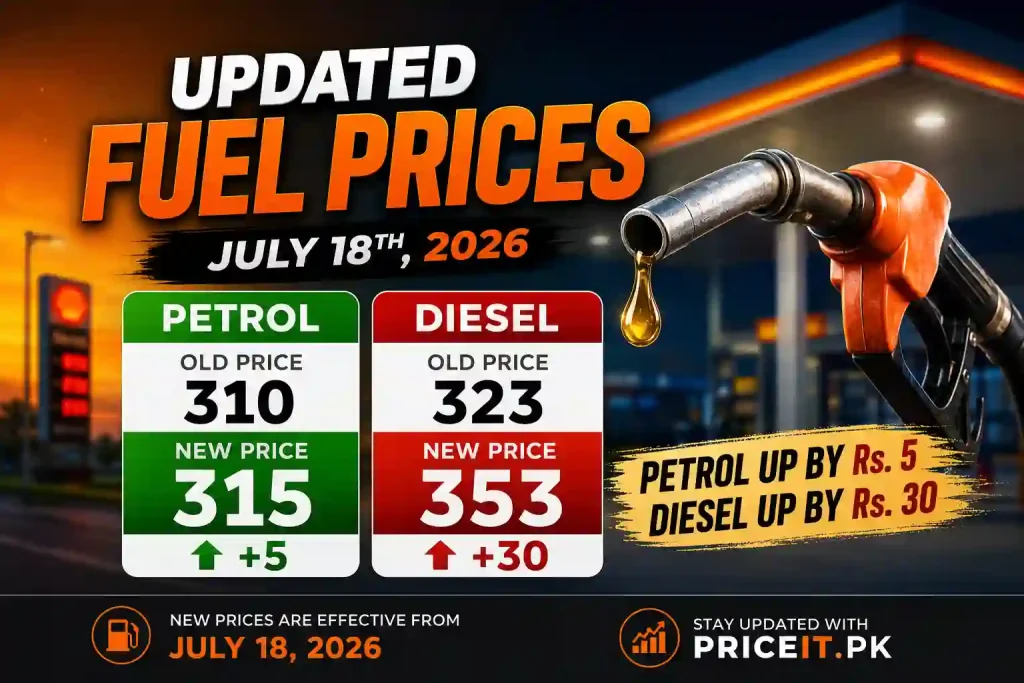
Pakistan Fuel Prices Increased from July 18, 2026
The Government of Pakistan has announced a new increase in fuel prices effective from July 18, 2026. Petrol has become more expensive by Rs. 5 per litre, while High-Speed Diesel (HSD) has recorded a much larger increase of Rs. 30 per litre. The revised prices are expected to affect transport costs, goods delivery, and overall household expenses across the country.
Fuel prices are reviewed every two weeks based on changes in the international oil market, exchange rate movements, and government tax policies. The latest revision reflects higher costs that may be passed on to consumers in different sectors.
Latest Petrol and Diesel Prices in Pakistan
| Fuel Product | Previous Price (Rs/Litre) | New Price (Rs/Litre) | Change |
|---|---|---|---|
| Petrol | 310 | 315 | +5 |
| High-Speed Diesel (HSD) | 323 | 353 | +30 |
• Petrol increased by Rs. 5 per litre.
• Diesel increased by Rs. 30 per litre.
• New prices are effective from July 18, 2026.
Fuel Price Comparison
| Fuel | Old Price | New Price | Increase (%) |
|---|---|---|---|
| Petrol | 310 | 315 | 1.61% |
| Diesel | 323 | 353 | 9.29% |
Why Have Fuel Prices Increased?
Several factors can influence fuel prices in Pakistan. Changes in global crude oil prices, fluctuations in the Pakistani Rupee against the US Dollar, freight costs, and government taxes all play a role. When international oil prices move higher or the local currency weakens, imported petroleum products become more expensive.
The government reviews fuel prices regularly to reflect these changes. This helps maintain the supply of petroleum products while adjusting prices according to market conditions.
How Will This Affect the Public?
The latest increase is expected to impact daily life in different ways. Diesel is mainly used in trucks, buses, tractors, and heavy transport. A large increase in diesel prices often leads to higher transportation costs and may also affect food and other essential goods.
Petrol users, including private vehicle owners and motorcycle riders, will also notice a small increase in their fuel expenses. Businesses that depend on transportation may experience higher operating costs.
Expected Impact on Different Sectors
| Sector | Possible Impact |
|---|---|
| Public Transport | Possible fare adjustments |
| Goods Transport | Higher delivery costs |
| Agriculture | Higher machinery operating expenses |
| Retail Market | Possible increase in product prices |
| Private Vehicles | Higher monthly fuel spending |
What Should Consumers Do?
- Plan unnecessary travel carefully.
- Maintain correct tyre pressure to improve fuel efficiency.
- Avoid sudden acceleration and harsh braking.
- Service your vehicle regularly.
- Use public transport or carpool when possible.
Conclusion
The latest fuel price revision brings another increase for consumers across Pakistan. Petrol has risen by Rs. 5 per litre, while diesel has increased significantly by Rs. 30 per litre. These changes are likely to affect transportation, business expenses, and household budgets over the coming weeks. Consumers should stay updated with official fuel price announcements and plan their fuel usage wisely.
Frequently Asked Questions (FAQs)
1. What are the new petrol prices in Pakistan from July 18, 2026?
The new petrol price is Rs. 315 per litre.
2. What is the new diesel price?
High-Speed Diesel is now priced at Rs. 353 per litre.
3. How much has petrol increased?
Petrol has increased by Rs. 5 per litre.
4. How much has diesel increased?
Diesel has increased by Rs. 30 per litre.
5. Why do fuel prices change every two weeks?
Prices are reviewed based on international oil prices, exchange rates, taxes, and import costs.
6. Will transport fares increase?
Transport operators may revise fares if operating costs continue to rise, especially after a large diesel price increase.
Read this also : Bitcoin Recovers Before Close: Daily Market Summary for July 17, 2026