Pakistan Airspace Closed for Indian Aircraft Until Feb 2026
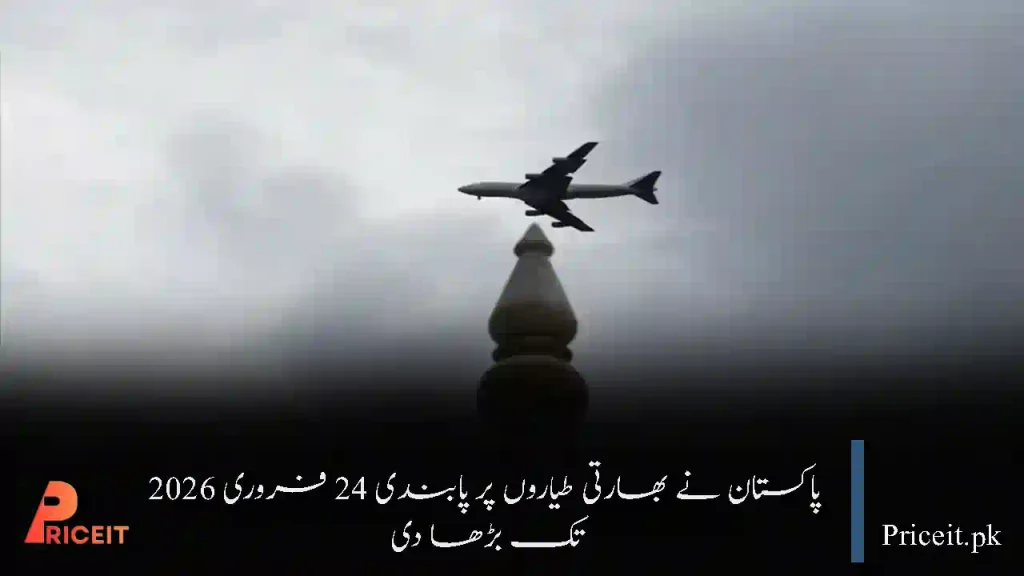
Pakistan has once again decided to extend the ban on Indian aircraft, keeping its airspace closed for Indian airlines, military flights, and leased aircraft until February 24, 2026. The decision was announced through an official aviation notice issued by the Pakistan Airports Authority. This marks another extension in a restriction that has now continued for many months, becoming one of the longest airspace closures between the two neighboring countries.
The extension has drawn attention not only from the aviation industry but also from political analysts, as it continues despite an existing ceasefire agreement between Pakistan and India. While flights between the two countries remain suspended, the Pakistan airspace closure for Indian aircraft has had far-reaching consequences for airlines, passengers, and regional air traffic routes.
This article explains the situation in detail — why the ban continues, who it affects, how it impacts airlines and travelers, and what it means for the future of aviation in the region.
Read this also : Is Benjamin Netanyahu Dead? Viral Video Sparks Online Debate
Pakistan Extends Ban on Indian Aircraft: What the Latest Decision Means
The Pakistan Airports Authority confirmed that the airspace ban on Indian aircraft will remain active until the early morning of February 24, 2026. The announcement was made through a Notice to Airmen, a formal aviation instruction that airlines and pilots are legally required to follow.
Under this notice, no Indian aircraft is allowed to enter or pass through Pakistan’s airspace. This includes all civilian flights, cargo operations, private jets, leased aircraft, and military flights linked to India.
This is not the first extension. Since the ban was introduced, Pakistan has renewed it multiple times, signaling that the decision is not temporary but part of a broader strategic approach.
Why Pakistan Closed Its Airspace to Indian Flights
To understand why Pakistan continues to extend the ban, it is important to look at the broader regional situation rather than aviation alone.
Security Concerns at the Core
Airspace control is directly linked to national security. Pakistan initially restricted Indian aircraft following heightened tensions between the two countries. These tensions created serious concerns about airspace safety, monitoring, and control.
Even though a ceasefire later reduced direct military activity along the border, Pakistan chose not to immediately reopen its airspace. Authorities appear to believe that reopening aviation routes requires more than a temporary reduction in conflict.
A Cautious State Policy
From Pakistan’s perspective, airspace access is a sensitive matter. Granting permission to foreign aircraft — especially from a rival country — requires a stable security environment and political confidence. Until those conditions are met, Pakistan has opted for caution.
What Is a NOTAM and Why It Matters
A Notice to Airmen, commonly called a NOTAM, is an official message issued by aviation authorities to inform pilots and airlines about changes that affect flight operations.
Why NOTAMs Are Critical
NOTAMs:
- Are mandatory for pilots to follow
- Guide airline route planning
- Carry legal authority under international aviation rules
In this case, the NOTAM clearly states that Indian aircraft are prohibited from using Pakistan’s airspace during the validity period. Airlines have no flexibility here. Routes must be adjusted accordingly.
Which Flights Are Affected by the Ban
The Pakistan extends ban on Indian aircraft decision impacts a wide range of aviation operations.
Commercial Airlines
Indian passenger airlines operating international routes are among the most affected. Flights traveling to:
- Europe
- The Middle East
- North America
would normally pass through Pakistan for shorter travel times. Now, they must take longer paths.
Cargo and Freight Operations
Cargo aircraft carrying goods face similar restrictions. Longer routes increase delivery times and transportation costs, affecting trade efficiency.
Military and State Aircraft
The ban also applies to military and government-owned aircraft, reinforcing the security nature of the decision.
Impact on Indian Airlines
Longer Routes and Higher Costs
Without access to Pakistan’s airspace, Indian airlines must reroute flights around the region. This leads to:
- Longer distances
- More fuel consumption
- Increased operating expenses
Fuel is one of the biggest costs for any airline. Even small route changes can result in major financial strain over time.
Operational Challenges
Airlines must also manage:
- Extended crew duty hours
- More complex scheduling
- Additional technical planning
These challenges reduce efficiency and strain airline resources.
Financial Losses
Industry experts estimate that Indian airlines have already lost billions of rupees due to the prolonged airspace closure. Every extension adds to these losses.
How Passengers Are Affected
While airlines deal with financial pressure, passengers feel the impact in everyday travel experiences.
Longer Flight Times
Many international flights now take one to four extra hours, depending on the destination. This is especially noticeable on long-haul journeys.
Higher Ticket Prices
As airline costs rise, some of that burden is passed on to travelers through increased fares.
Schedule Disruptions
Rerouted flights may lead to:
- Missed connections
- Adjusted departure times
- Reduced route options
Although safety is not compromised, convenience certainly is.
Why the Ban Continues Despite a Ceasefire
One of the most common questions is why Pakistan continues the ban even though firing along the border has reduced.
Ceasefire Is Not the Same as Trust
A ceasefire lowers immediate military risk, but it does not automatically restore trust or cooperation. Aviation access involves long-term planning, surveillance considerations, and diplomatic confidence.
Strategic Use of Airspace
Airspace restrictions are a powerful non-military tool. By controlling access, a country can apply pressure without escalating conflict. This allows Pakistan to protect its interests while avoiding direct confrontation.
How Airspace Closures Change Flight Paths
Before the ban, many Indian flights used Pakistan’s airspace because it offered:
- Direct routes
- Lower fuel usage
- Shorter travel times
After the Closure
Flights are now rerouted through:
- Southern maritime corridors
- Alternative regional airspaces
These changes increase:
- Travel distance
- Fuel burn
- Air traffic congestion elsewhere
Environmental Impact of the Airspace Ban
An often overlooked aspect is the environmental cost.
Longer routes mean:
- More fuel burned
- Higher carbon emissions
- Greater environmental impact
While airlines are working on sustainability, airspace restrictions make emissions reduction more difficult.
Historical Context of Airspace Bans Between Pakistan and India
This is not the first time airspace has been restricted between the two countries.
Past Tensions and Closures
In previous periods of heightened tension, both countries have limited aviation access. However, most past bans were short-lived.
Why the Current Ban Is Different
The current restriction stands out due to:
- Its long duration
- Multiple extensions
- Broad scope covering all aircraft types
This signals a deeper strategic decision rather than a temporary reaction.
International Aviation Law Perspective
Under global aviation rules:
- Countries fully control their airspace
- Access is a privilege, not a right
- Security concerns justify restrictions
From a legal standpoint, Pakistan’s decision fits within accepted international practices.
Public and Industry Reaction
Aviation Industry Response
Airlines have expressed concern about:
- Rising costs
- Long-term route sustainability
- Competitive disadvantages
Despite this, compliance is mandatory.
Public Opinion
Public reaction is mixed. Some support the decision on security grounds, while others worry about its economic impact. The issue remains sensitive on both sides of the border.
Common Questions Readers Are Asking
What Would Be Required to Reopen the Airspace
For Pakistan to reopen its airspace, several conditions would likely need to improve:
- Political dialogue
- Security stability
- Confidence-building measures
- Regional cooperation
Until then, extensions remain possible.
Future Outlook
Based on current conditions:
- Short-term reopening appears unlikely
- Further extensions cannot be ruled out
- Aviation will continue to reflect political realities
Airspace decisions often move slower than diplomacy, especially in sensitive regions.
Key Points to Remember
- Pakistan has extended the ban on Indian aircraft until February 24, 2026
- The restriction applies to all Indian-owned, operated, or leased aircraft
- Indian airlines face heavy financial and operational challenges
- Passengers experience longer travel times and higher costs
- The ban reflects broader political and security considerations
Conclusion
The decision that Pakistan extends ban on Indian aircraft is not just an aviation policy update. It is a reflection of ongoing regional tensions, strategic caution, and national security priorities. While airlines and passengers deal with the immediate effects, the long-term outcome depends on political stability and mutual trust between the two countries.
Until meaningful progress is made, Pakistan’s airspace is likely to remain closed to Indian aircraft — a reminder that in this region, aviation and geopolitics are deeply connected.
Read this: New Grading System Approved for Matric and Inter in Sindh
Read this: Monkeypox Threat in Lahore